Blog

National Policy Recommendations on Fighting Antigypsyism in the Czech Republic

Antigypsyism in the Czech Republic represents a deeply rooted, historically conditioned, and structural phenomenon that systematically limits life opportunities and threatens social cohesion. It is not merely a collection of isolated prejudices, but a persistent societal force, manifesting in alarming socio-economic inequalities and extremely negative attitudes from the majority population.

The paper ‘National Policy Recommendatons on Fighting Antigypsyism in the Czech Republic‘, authored by Slovo 21, is based on a thorough analysis and synthesis of several key data sources, combining both quantitative and qualitative approaches. The primary foundation is the Jekhipe project’s questionnaire survey, which specifically maps perceptions of the impacts of antigypsyism and evaluations of current policies among key stakeholders from public administration, Roma civil society, and experts. This primary data is complemented by stakeholder mapping, which identifies and analyses key institutions and individuals influencing Roma-related policies. Further context and deeper understanding are provided by an analysis of secondary data, including: a representative quantitative survey on the socio-economic situation of Roma (RILSA); in-depth qualitative research on lived experiences of discrimination; public opinion surveys (CVVM); analyses of educational segregation (PAQ Research, STEM); recommendations from the Public Defender of Rights; and critical assessments of national strategies and specific policies based on civil society monitoring reports (Roma Civil Monitor).

About the author:  Since its inceptionin 1999, Slovo21 strives to contribute to a better mutual understanding within our diverse society. Slovo21 is an organization that cooperates with state and non-governmental non-profit organizations and institutions from the Czech Republic and abroad to fight stereotypes and to encourage the self-confidence of minorities and support their education.

National Policy Recommendations on Fighting Antigypsyism in Romania

In Romania of the last years, the anti-Roma racism/antigypsyism increased and diversified, as the National Research Report “Antigypsyism in Romania: Lessons (not) learned” (17 November 2022), the most recent report on the anti-Roma racism in Romania, shows, underlining that “The most egregious manifestations of antigypsyism in Romania include school segregation, police violence, inequality in administration of justice, hate speech, lack of environmental justice, exclusion from knowledge production, and the absence of Roma cultural institutions.

Roma are the least trusted persons in Romania, according to a survey conducted by the Institutul Roman pentru Evaluare si Strategie (IRES) [Romanian Institute for Evaluation and Strategy] in July 2020, with 70% percent of respondents claiming not to trust Roma. Seven of the eight characteristics which respondents used to describe Roma were negative and only one was neutral (Europa Libera, 2020). These results are consistent with other polls assessing trust in Roma, indicating that distrust in Roma is widespread.” (Rostas and Nodis 2022: 9-10).

The aim of the paper ‘National Policy Recommendatons on Fighting Antigypsyism in Romania‘, authored by Amare Rromentza, is to conduct a process of lobby, advocacy and pressure on the state authorities to recognize and assume the issue of the anti-Roma racism/antigypsyism and to realize and understand the concept of transitional justice as a mean to prevent and combat the anti-Roma racism/antigypsyism, to repair and compensate, at least partially, the chronic/historical and current racial discrimination and to build reconciliation among the Roma and the majority society and to create an intercultural public space.

About the author:  Amare Rromentza is a non-profit, apolitical association whose mission is the multisectoral development of Roma people based on the exercise of civil, economic, social, cultural, and political rights, ensuring access to resources, and identity reconstruction.

The paper ‘National Policy Recommendatons on Fighting Antigypsyism in Romania’ is available in both English and Romanian and can be downloaded below.

National Policy Recommendations on Fighting Antigypsyism in Spain

The paper ‘National Policy Recommendatons on Fighting Antigypsyism in Spain‘, authored by Rromane Siklovne, examines how antigypsyism in Spain operates as a deeply rooted, structural form of racism shaped by centuries of persecution, unacknowledged historical injustices, and ongoing discrimination in housing, education, employment, policing, and media representation. It argues that while the National Strategy for Equality, Inclusion and Participation of the Roma Population (2021–2030) formally promotes Roma inclusion, its effectiveness is limited because it treats antigypsyism as a social issue rather than a structural and historical one.

Drawing on stakeholder mapping, survey data, and policy analysis, the paper highlights persistent gaps such as inadequate accountability, fragmented and underfunded initiatives, and the lack of Roma history in school curricula, alongside evidence of school segregation, racial profiling, and discriminatory housing practices. It proposes reforms—including integrating Roma history into education, strengthening institutional mechanisms, monitoring antigypsyism at the local level, and supporting Roma-led projects—to influence current policymaking and, in the long term, institutionalize transitional justice, secure historical recognition, and enhance Roma participation toward a more just and democratic Spain.

About the author:  Rromane Siklǒvne is a youth organization founded in 2011 in the Bon Pastor neighborhood of Barcelona. It is made up of the first Roma students in the neighborhood who completed compulsory education and went on to higher studies. The organization aims to support the other Roma boys and girls in the neighborhood to complete their compulsory education and to encourage them to continue their educational and training process.

National Policy Recommendations on Fighting Antigypsyism in Sweden

Antigypsyism in Sweden is structural, persistent, and deeply rooted. Despite progress—such as the 2014 White Paper on abuses against Roma, the Commission against Antiziganism (2014–2016), the 2012–2032 long-term Roma Strategy, and the 2025–2029 Action Plan against Racism and Hate Crime—Roma continue to face systemic discrimination in education, housing, policing, employment, and access to public services. Trust in institutions remains fragile after the 2013 “Roma register” scandal, and guarantees of non-recurrence are still incomplete.

Civil society monitoring highlights ongoing gaps: only about 11% of municipalities actively implemented Roma inclusion measures in 2022–2023; Roma students still face bullying, segregation, and low expectations; hate crimes remain under-reported and rarely prosecuted; and Roma organisations are chronically underfunded and excluded from real co-governance. Meanwhile, ethnic stereotyping in political discourse has resurfaced, fuelling prejudice and exclusion.

At the same time, new government mandates in 2024–2025—including Brå’s in-depth study of antigypsyist hate crime, Forum för levande historias assignment to strengthen school materials, and the transfer of minority policy coordination to MUCF—create both risks and opportunities. Roma CSOs warn that rushed, non-consultative reforms undermine trust, but also see a window for systemic change if reforms are anchored in transitional justice principles.

The paper ‘National Policy Recommendatons on Fighting Antigypsyism in Sweden‘, authored by Trajosko Drom, synthesises national policy and legal analysis, civil society monitoring, stakeholder mapping, and findings from a national survey of stakeholders on transitional justice and combating antigypsyism. It builds on Roma Civil Monitor reports and independent Roma civil society submissions, while aligning with EU and Council of Europe standards and the JEKHIPE project’s transitional-justice approach.

About the author: Trajosko Drom is a Roma women’s association that works with rights issues and social development for the Roma minority. The organization is involved in a wide range of social and cultural issues, with a special focus on women’s issues

Strategies and Recommendations to Combat Antigypsyism in Germany

The research brief ‘Strategies and Recommendations to Combat Antigypsyism in Germany‘, authored by Dezső Máté, is based on CHACHIPEN findings and on the JEKHIPE objectives on antigypsyism, transitional justice, and recommendations. The paper aims to offer an overview and update on the latest developments in international procedures and, more precisely, on German policy developments in 2024.

The word ‘CHACHIPEN’ means ‘truth’ in Romani language. The initiative’s main goal is to recognise, understand, and ultimately support action against structural and systemic antigypsyism in Europe and beyond. The project’s priority is to promote justice and equality and the sufficient, fair, and dignified recognition and participation of the Romani people as equal European citizens. The initiative’s aims are graded through the Truth and Reconciliation Processes (TRP) model, which supports the recognition of human rights violations and discriminatory practices hindering the full implementation of European Union (EU) non-discrimination laws1.

About the author: Dr. Dezso Mate is an Associate Research Fellow at the Europa – Universität Flensburg, Interdisciplinary Centre for European Studies, and a Visiting Researcher at Heidelberg University, Research Centre on Antigypsyism.

The Research Brief has been coordinated by the Centre for European Policy Studies (CEPS).

FAGiC Celebrates 600 Years of Memory and Culture in the Palau Robert

Institutions and members of the Roma community came together to celebrate cultural heritage and collective memory through song, dance, and music, in an event highlighting the importance of resistance and historical recognition.

This year, the traditional Cultural Days organized by the Federation of Roma Associations of Catalonia (FAGiC) focused on the 600th anniversary of the Roma presence on the Iberian Peninsula, as well as on celebrating the contributions of Roma culture to society, with particular attention to flamenco singing and its crucial role in constructing collective memory.

The central event was a lecture by musicologist and researcher Gonzalo Montaño, an expert in flamenco singing, who addressed both the historical and contemporary significance of this musical expression with rigor and sensitivity.

Before the lecture, Simón Montero, president of FAGiC, welcomed the audience and emphasized Roma art as a fundamental element in the construction of the community’s historical memory.

“If there is one thing that characterizes our community, it is that we have transmitted our memory, our history, and our identity through art: singing, playing, and dancing have been vehicles of resistance, dignity, and intergenerational connection. Every beat of flamenco is a page of our history, written with hands and heart. Flamenco, flamenco singing, and Catalan-Roma rumba are not just art—they are our voice transformed into universal heritage, a sound archive of our historical memory.”

Montero also referred to the European project JEKHIPE—which means “unity” in the Romani language—led by FAGiC alongside other organizations with the aim of strengthening the participation, memory, and rights of the Roma people across Europe.

“This project reminds us that culture and art are tools for collective empowerment and recognition of our shared history. When culture is shared, society is strengthened; and when the Roma people have a voice, all of Catalonia gains in diversity, freedom, and humanity. Together, we continue building a more just, diverse, and proud Catalonia,” Montero said, encouraging collective action.

Xavier Menéndez i Pablo, Director General of Democratic Memory of the Government of Catalonia, then spoke, recalling “the obligation to repair the memory of the victims of the Civil War and the Franco regime, particularly those communities targeted during the dictatorship—a reparation grounded in justice and truth.”

He emphasized the importance of listening to the Roma community and lamented the lack of systematic studies documenting their experiences during the dictatorship. “We lack research and systematic documentation that brings us closer to the experiences of those Roma who suffered abuses during the dictatorship.”

Menéndez i Pablo also noted that the Parliament of Catalonia is currently discussing the forthcoming Democratic Memory Law, which aims to be as comprehensive as possible by incorporating contributions from various Roma organizations. Additionally, he announced plans to establish a working commission to analyze the history of the Roma people during the dictatorship.

He concluded his intervention by warning about the current rise of hate speech, particularly targeting minorities such as the Roma community, and defended the role of public memory policies as tools to combat forgetting, racism, and xenophobia. “The suffering of victims and their descendants must be heard, especially in a European context where far-right discourse is resurging,” he noted.

Anabel Carballo, director of FAGiC, thanked Menéndez for his words and reflected on collective memory: “When we talk about memory, we refer to the body of collective recollections that the Roma people preserve: their experiences, struggles, achievements, suffering, joys, and traumas. We are not speaking of specific dates or events, but of the way the community remembers its history through its own experience, especially when it has been excluded and invisibilized by official history.”

“Today, we will journey through a history rarely found in textbooks, a history passed down from generation to generation. We will speak of Roma memory through their singing,” Carballo said, introducing Gonzalo Montaño Peña’s lecture.

A cultural promoter and Roma rights activist, Montaño’s work focuses on highlighting and valuing Roma cultural heritage in Spain and beyond. A musicologist and flamenco researcher, he has published widely and coordinated a European initiative documenting Roma cultural heritage in Europe, aiming to establish a recognized cultural route in collaboration with ERIAC (European Roma Institute for Arts and Culture) and the National Association Presència Gitana.

In his lecture, Montaño addressed three key elements of Roma historical resistance: the Romani language, flamenco singing, and Catalan-Roma rumba. Combining critical analysis with celebration, he invited the audience to see these artistic expressions not only as cultural heritage but also as forms of survival, dignity, and knowledge transmission.

“Roma memory is not written in official books. It lives in oral tradition, in song, in language, in bodies that dance, and in words that persist,” Montaño said.

He traced centuries of institutional persecution, from the first anti-Roma decree in 1499 to contemporary forms of cultural appropriation and whitening that still affect flamenco and its Roma roots.

A central point of the lecture was the Romani language, persecuted since the arrival of the first Roma families on the Iberian Peninsula in the 15th century. Montaño explained how this language—key to identity and community cohesion—was seen as a threat to the cultural homogenization policies of the Spanish monarchies. Laws prohibited its use, breaking intergenerational transmission and relegating the language to private settings. “Speaking Romani was punishable,” he recalled.

In this imposed void, flamenco singing emerged as a new archive of memory. Montaño emphasized that flamenco was more than an artistic expression: it became an emotional language and a way to narrate Roma history when the community could no longer speak in its original language. For centuries, amid cultural repression, flamenco preserved voices, wounds, and joys of a community that never stopped creating. “Song resisted where the language was silenced,” he noted.

Montaño later discussed the evolution and professionalization of flamenco in the 19th century, highlighting key figures such as Tío Luis el de la Juliana and Planeta, whom he described as “guardians of memory and transmitters of a history that was never written.” He also addressed the displacement of Roma subjects in flamenco as it adapted to mainstream tastes, a form of appropriation that persists in many cultural representations.

Finally, Montaño highlighted Catalan-Roma rumba, which emerged in the 1950s in neighborhoods such as Raval, Gràcia, and Hostafrancs, as a contemporary and hybrid expression of Roma cultural identity. “Rumba was not born in conservatories, but in the streets, courtyards, and family celebrations,” he said. This musical style blends Roma and Catalan identities and expresses collective joy, itself a form of resistance.

The lecture concluded with a call to revive the Romani language and actively defend Roma memory as living heritage. “Memory does not preserve itself. It must be defended, protected, transmitted… and sung,” Montaño concluded.

Following a public discussion, the 2025 Roma Cultural Days concluded with the presentation of awards to the winners of the “Pintem de Gitano Catalunya” project. Despite a rainy afternoon in Barcelona, the event celebrated voices and reflections emphasizing the importance of continuing efforts to recognize, value, and promote Roma culture in all public spaces throughout Catalonia.

Book presentation: “We Escaped on Our Own”. Eyewitness Accounts of Romanian Roma from the Pogrom in Rostock-Lichtenhagen (1992)

On June 26, 2025, a special book presentation and artistic reading titled “We Escaped on Our Own: Eyewitness Accounts of Romanian Roma from the Pogrom in Rostock-Lichtenhagen (1992)” took place, exploring the experiences of Romanian Roma during one of the most significant episodes of racist violence in post-war Germany.

The Rostock-Lichtenhagen pogrom, which occurred in August 1992, involved days of violent attacks targeting Romanian-Roma asylum seekers and Vietnamese migrant workers, highlighting the anti-Roma and anti-immigrant sentiments prevalent in Germany at the time.

The book, edited by the Documentation Center “Lichtenhagen in Memory” and the State Center for Political Education Mecklenburg-Vorpommern, compiles interviews with survivors of the pogrom, offering firsthand perspectives on the events and their aftermath.

The evening began with an introduction by human rights activist Izabela Tiberiade, a researcher and educator born in a traditional Romani community in Craiova, Romania, and a graduate of the University of Malmö. This was followed by an interview-screening with survivor Marian Dumitru, sharing his personal account of the pogrom. The program concluded with an artistic reading of testimonies by actress Bianca Babașa, a Romani performer from Romania trained at the National University of Theater and Cinematography “I.L. Caragiale” in Bucharest, who is also active in social projects using theater as a tool for dialogue and social change.

Through survivor testimony, scholarly insight, and artistic interpretation, the event offered a powerful reflection on the legacy of the Rostock-Lichtenhagen pogrom and the resilience of the Roma community.

Ribbons of Solidarity – Fighting Antigypsyism Campaign at KHAMORO Festival

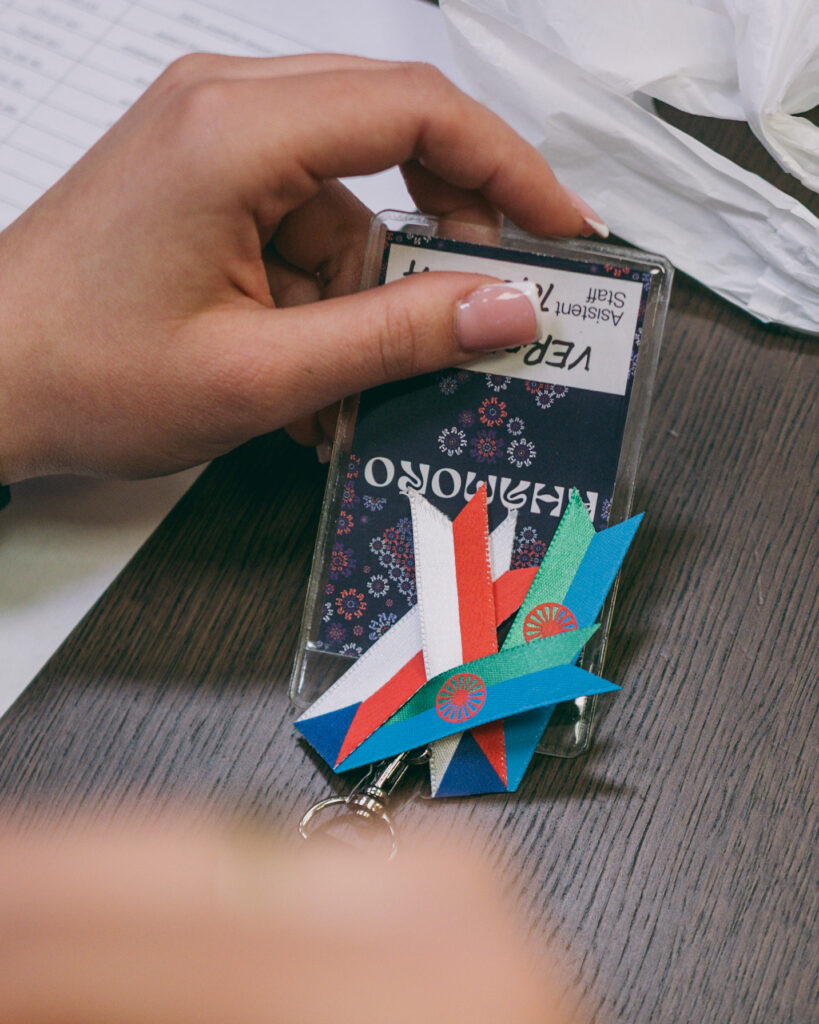
KHAMORO festival, known as the festival of sunlight, reaffirmed that diversity is not a barrier but a source of collective richness. The participants at the 2025 edition showed strong interest and support for the campaign against antigypsyism, organized by Slovo21. Many attendees proudly wore ribbons featuring the Czech and Roma flags—a small symbol, yet a deeply meaningful gesture of solidarity and respect.

Expressions of gratitude go to all who stopped by, engaged in conversation, listened, or supported the initiative. KHAMORO was not only a celebration of music and Roma culture; it was also a space for connection, dialogue, and a shared reminder of a simple truth: people are united most fundamentally by their humanity.

FAGiC Marks 600 Years of Roma Persistence with a Commemorative Event

The commemoration of the 600th anniversary of the arrival of the Roma people to the Iberian Peninsula has created, more than ever before, an opportunity for Roma demands to take a central place on both the national and regional political agenda.

In Catalonia, alongside the legislative proposal to develop a National Pact against Antigypsyism and for the Inclusion of the Roma People, the Parliament is currently studying the Draft Law on Democratic Memory of Catalonia. Several Roma organizations are actively contributing to this initiative, submitting proposals to ensure visibility for Roma history.

In this context, the Federation of Roma Associations of Catalonia (FAGiC) organized a conference titled “600 Years of Roma Persistence: Memory and Resistance.” The aim was to promote reflection and dialogue among representatives of the main parliamentary groups, members of the Roma associative movement, and broader civil society.

The Pati Llimona Civic Center, a heritage site that carries the history of Barcino itself, provided an ideal setting to discuss history, memory, forgetting, justice, and reparation.

“We are here today to pay tribute to six centuries of resistance, of a living culture, of the struggle for our rights. Six hundred years have passed since the first document recording the arrival of the Roma people to the Peninsula, and we are still demanding recognition, justice, and reparation. Equality cannot be built without memory. It is time to place at the center the truth of what our people have lived,” said Simón Montero, president of FAGiC, in his opening speech. He also situated the event within the European project Jekhipe—meaning “unity” in Romanes—led by FAGiC together with other Roma organizations across Europe to promote justice processes in response to antigypsyism.

In addition to Montero, the opening session featured remarks by Xavier Menéndez, head of Democratic Memory for the Government of Catalonia, and Raquel Gil Eiroa, Councillor for Economic Promotion, Labour, Feminisms, and Democratic Memory at the Barcelona City Council.

Menéndez noted that “one of the groups most affected by repression is the Roma people—not only during the Franco regime, but for the past 600 years.” He highlighted the government’s broad agreement and willingness to incorporate the proposals of Roma organizations into the Democratic Memory Law, including acknowledging the Roma people as a specific victim of Francoism, establishing a working commission on repression against Roma communities, and including August 2—Roma Genocide Remembrance Day—among the annual commemorations mandated by the law.

Raquel Gil focused her remarks on the deep-rooted presence of the Roma people in Barcelona, despite a “history of discrimination, stigma, and marginalization.” She emphasized their “extraordinary resilience, persistence, and capacity for resistance,” noting that the Roma community “has not only survived but has, with strength and dignity, contributed culture and creativity to the life of our city.”

Following the opening speeches, the first roundtable began: “600 Years of Institutional Antigypsyism and Policies of Recognition.” Participants included Members of the Catalan Parliament Natalia Fabián Corbacho (Socialists), Andrés García Berrio (Comuns), Jordi Albert i Cavaller (Esquerra Republicana), and Francesc de Dalmases i Thió (Junts).

Andrés García emphasized that work on the National Pact against Antigypsyism will begin soon, noting that “the memory component of the Roma people is central.” He stressed that the pact should be based on consensus and called on civil society to participate so that the law can be “truly useful” for the Roma population. He also argued that both the pact and the Democratic Memory Law are first steps toward a dedicated law on Roma historical memory.

Natalia Fabián agreed, saying that “600 years cannot be repaired with a single memory law,” but that this first step “is important because it will help us understand the reasons why.” She highlighted the crucial role of Roma organizations, stating that “if you had not pushed and demanded to take part, this law would not include the Roma people.”

Jordi Albert opened his remarks by stating that “every year should be the 600th year—not only this year—and we must not forget the long process of repression and suffering endured by the Roma people.” He argued that the parliamentary process must help identify the motivations behind this persecution, asking: “Why have Roma people historically been, and continue to be, subjected to repression and discrimination? Why suppress their way of life? What purpose does this serve?” He emphasized that answers should arise from scientific knowledge and the work of Roma organizations and must ultimately lead to concrete measures to ensure such persecution does not happen again.

Francesc de Dalmases reflected on three recent situations in which he noticed the complete omission of the Roma people from matters directly related to their history and experience. He argued that this parliamentary session must represent a turning point. “If any other group had the same levels of poverty, school dropout, or housing insecurity as the Roma people, any government would immediately launch an emergency plan to reverse such numbers, which are unacceptable in a democracy.”

A second roundtable followed, featuring Paqui Perona (Veus Gitanes), Pedro Casermeiro (Rromane Siklǒvne), and Fabián Sánchez (Presència Gitana). This session focused on highlighting the living memory of the Roma people through activism, culture, and community engagement.

Speakers identified key challenges related to collective and democratic memory, including the need for official recognition of Roma demands, incorporating a historical memory perspective when addressing present-day problems rooted in centuries of persecution, fostering greater unity within the Roma community, and placing the Romanes language at the center.

After this discussion on the challenges involved in building a solid and integral Roma collective memory within Catalonia’s broader identity and historical narrative, the event moved to its closing session. Remarks were delivered by Susana Martínez Heredia, Member of the Catalan Parliament, and Sara Belbeida Bedoui, Commissioner for Citizen Relations and Cultural and Religious Diversity at the Barcelona City Council.

Martínez Heredia noted that the commemoration “is not only about looking back, but also about recognizing that we have reached this point thanks to the resistance, resilience, and strength of our people—and also thanks to the support of many non-Roma allies who have walked alongside us.” She highlighted the meaning of the project’s name, Jekhipe, noting that its central value is “unity—unity among Roma people, but also unity with all those who listen, understand, accompany, and work with us for a more just and inclusive society.”

Belbeida expressed her gratitude to FAGiC for its daily work and for organizing this space of collective recognition. “This is a year to look back with a critical mindset and to move forward toward justice and reparation. You have reminded us that there is no true democracy without recognition, without reparation, and without equal rights—and that this is only possible through public policies designed with the community and through Roma presence in decision-making spaces.” She also shared several innovative initiatives being developed by the City Council in cooperation with the Roma associative network.

Fighting Antigypsyism Through Culture – Panel Discussion at KHAMORO Festival

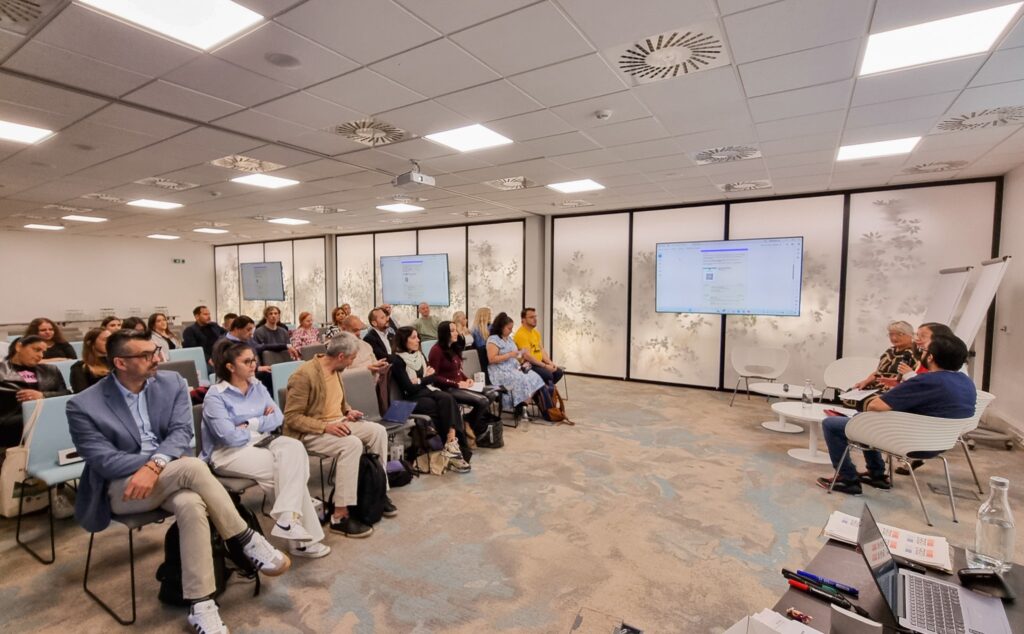
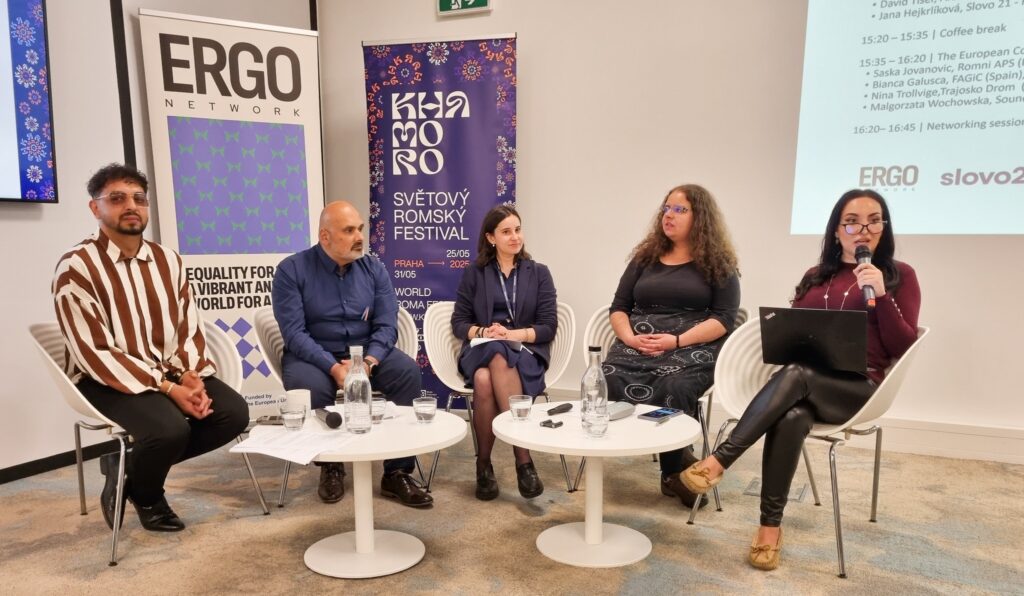
The KHAMORO festival, organized by Slovo 21, is known primarily for its cultural programming, but its scope extends far beyond music. As part of the 2025 program, the festival hosted a panel discussion focused on the role of culture in addressing and countering antigypsyism.

The discussion brought together representatives from the Sound of Diversity project as well as organizations within the ERGO Network. The panels addressed both the Czech and broader European contexts, offering a comparative view of current challenges and approaches.

During the session, Jan Husák presented the Jekhipe project, outlining data on antigypsyism and the motivations that led to the project’s development. David Tišer from ARA ART introduced the concept of artivism, highlighting the ways artistic expression can intersect with social engagement. The KHAMORO team also presented how the festival itself contributes to raising awareness and fostering change in this area.

Organizations from across Europe—Romni Onlus (Italy), Federació Assoc Gitanes Fagic (Spain), and Trajosko Drom (Sweden)—shared their experiences and ongoing activities, adding valuable international perspectives. The discussion provided an important space for exchanging knowledge, building connections, and strengthening cooperation across Europe.