Blog

Statement on the proposal of the International Holocaust Remembrance Alliance (IHRA) for a “Working Definition on Antigypsyism”

Statement on the proposal of the International Holocaust Remembrance Alliance (IHRA) for a “Working Definition on Antigypsyism”

A statement by the Alliance against Antigypsyism and partners
Statement of the Alliance against Antigypsyism about the current working process of the International Holocaust Remembrance Alliance (IHRA) to adopt a new "working definition of antigypsyism".

As a group of Roma and pro-Roma scholars, politicians and civil society representatives from across Europe, we highly welcome the commitment of Germany’s Chairmanship of the International Holocaust Remembrance Alliance to support the adoption of a Working Definition on Antigypsyism by IHRA.

IHRA has demonstrated great efforts to advance recognition, research, remembrance and education about the Genocide of Sinti and Roma. An IHRA Working Definition on Antigypsyism can make an important contribution to combat this specific form of racism – which is deeply rooted in our societies for centuries – and its complex mechanisms and manifestations.

We express our strong concerns and baffled surprise that, after a long-lasting consultation process, IHRA intends to change the main terminology from “Working Definition on Antigypsyism” to “Working Definition on Anti-Roma Racism” just shortly before the planned adoption of the working definition.[1] We ask IHRA to instead recognize and build on the work that has been done, especially by many Romani organizations and scholars for over two decades, all across Europe and the US, in order to advance the recognition of antigypsyism as a specific form of racism. It would give a highly irritating signal to all the institutions from both governmental and civil society level if these efforts are not only ignored but declared worthless and counterproductive.

The struggle for a recognition of antigypsyism as a specific form of racism

Romani civil society and scholars have been at the forefront for decades in the fight against antigypsyism, which is at the core of our civil rights struggle for equality of rights for Roma, for equal participation, and for a society free of racism. For over two decades there has been a gradual process to deepen the understanding of antigypsyism, to analyze its mechanisms and manifestations, and to find and negotiate a working definition. While there are already definitions of racism, such as by the UN Committee for the Elimination of Racial Discrimination, IHRA will be able to advance with this working definition a common understanding of antigypsyism and its broader implications to offer policy-makers, administrations, judges, educators, media and other stakeholders a clear guidance to identify incidents and structural mechanisms of antigypsyism.

The term “antigypsyism” has been used in English at least since the 1980s by the eminent US-American Romani scholar and activist Ian Hancock, and has become more and more recognized by Romani[2] and pro-Roma scholars and organizations as well as by mainstream political institutions ever since. The European Parliament recognized antigypsyism as a specific form of racism in 2015[3], and called upon the Commission and Member States in its 2017 resolution to adopt and apply a Working Definition on Antigypsyism.[4] After a first proposal for a working definition by the European Commission against Racism and Intolerance (ECRI) of the Council of Europe from 2011, the Alliance against Antigypsyism[5] – with the support of over 100 Romani and pro-Roma organizations from across Europe – proposed a clear working definition in 2015 and contributed to advance a deeper understanding of the exclusionary and structural mechanisms of antigypsyism. Not only have many resolutions[6] of the European Parliament addressed antigypsyism, but also the key policy documents of the European Commission defined the fight against antigypsyism as a priority.[7] The EU High Level Group on combating racism, xenophobia and other forms of intolerance issued in 2018 a guidance paper[8] on combating antigypsyism, and the Austrian EU Presidency[9] convened a large international conference on combating antigypsyism with wide Romani participation leading to a key set of recommendations. The Council of Europe Committee of Ministers adopted the Strategic Action Plan for Roma and Traveller Inclusion 2020-2025[10] with combating antigypsyism as a key priority. The UN adopted already in 2015 a report on the human rights situation of Roma worldwide with a specific focus on antigypsyism.[11] In 2016, the German OSCE Chairmanship hosted with OSCE-ODIHR and partners a high-level event on confronting antigypsyism and the role of majority societies.[12]

The debate about terminology

We recognize that language evolves and terminology may vary in different countries and languages. The international working definition of antigypsyism or anti-Roma racism is not only a matter of the context and notions in a specific, native English-speaking country, as English is recognized as the  common language of Europe and the International Organizations. While the IHRA Working Definition and the terminology on antigypsyism needs to be translated into many languages, taking into account the national context and discourses – including in English-speaking countries – we highly recommend that the international Working Definition recognizes the term antigypsyism.

This letter cannot extensively analyse all differences and commonalities of the terminologies “antigypsyism” and “anti-Roma racism”, which can be found in many published papers.[13] We  understand that with the use of  “anti-Roma racism” your intention is to put Roma – who are mostly affected by this specific form of racism – at the centre of attention, and  to avoid using the stigmatizing, racist notion “gypsy” in public discourse. However, “anti-Roma racism” does not explain and cover the complexities of the mechanisms and manifestations of antigypsyism, the first of which is precisely the fabrication of the imagined social category of “gypsies”.

Furthermore, the endonym “Roma” is free, so far, from any negative meaning whenever it refers to the ethnic identity of Romani people in all their social diversity. Thus, the expression “anti-Roma racism” induces the idea that this racism targets Romani people as such, and not as a category of people stigmatised and amalgamated with other non-Romani individuals or groups by external observers under many different names in different languages. Such an approach can also lead to a false understanding where racism against Roma is differentiated from racism against, e.g., Balkan Egyptians or other groups that do not self-identify as Roma, thus ignoring the roots, extent and manifestations of this racism which lay in the perception of the majority societies. The terminology thus falls back behind a crucial understanding of prejudice that IHRA showcased with its adoption of the working definition on antisemitism, that it is a “certain perception of Jews” that can be “directed toward Jewish or non-Jewish individuals”.

The value of the terminology “antigypsyism”

Antigypsyism is the specific racism towards Roma, Sinti, Travellers and others who are stigmatized as ‘gypsies’ in the public imagination by majority societies. There is no doubt that we fully support the claim of Romani people – to whom many of us belong – to be able to self-define and self-identify with the names that we know and use since centuries. The use of “antigypsyism” in English with its equivalents in other languages does not affect this fundamental right; on the contrary, the deconstruction of this form of racism will show how it associated an ethnic identity to the social identity of an unwanted group. In this respect, “gypsy” is the equivalent of “tigan”, which meant “slave” in the Romanian principalities of Moldova and Wallachia where Roma were maintained in slavery from 1385 to 1856.  Using the term “antigypsyism” allows to critically analyze the history and patterns of oppression by considering different historical forms such as slavery, expulsion from cities, “gypsy hunts” and other attempts to exterminate those labelled as “tigan”/”gypsy” long before these practices were named with terms such as racism or genocide. Nazi politics put this power of definition by the oppressors to a new extreme, with certificates of racial belonging written for every person, suspected to be ‘Zigeuner’, as a basis for extermination. 

Not only was the Genocide of Sinti and Roma denied and ignored for decades following the Second World War, but also this specific form of racism is often denied up to this day, which has allowed societies and institutions to justify exclusionary policies and even to blame Roma for the misery that they suffer.  The increasing recognition of antigypsyism in recent years has led to an important turn of perspective: Antigypsyism is not a ‘minority issue’. It is a phenomenon of our societies, which has its origin in how the social majority views and treats those whom they consider ‘gypsies’. To combat antigypsyism, our attention and the responsibility needs to shift to mainstream societies and institutions, while raising the voices of those who are dramatically affected by antigypsyism, but also usually silenced by it.[14]

This approach and understanding allows us to identify and combat many hidden and structural mechanisms and manifestations of antigypsyism, in particular in the public discourse, in media and cultural productions, and in institutional behavior.

The world today is again facing a new wave of nationalism, antigypsyism, antisemitism, islamophobia and racism. Historical remembrance is always a lived responsibility for the present and the future. When we remember the crimes of National Socialism and the genocide/Shoah today, we must simultaneously defend the rule of law and democracy.

We strongly encourage the International Holocaust Remembrance Alliance to build on the efforts of many stakeholders in the last two decades, and to take this important work forward through the adoption of the “Working Definition on Antigypsyism”.

Footnotes

[1] IHRA President’s Statement on the Working Definition of Anti-Roma Racism (03.07.2020)

[2] see e.g. Valeriu Nicolae (2006): Towards a Definition of Anti-Gypsyism

[3] European Parliament resolution of 15 April 2015 on the occasion of International Roma Day — anti-Gypsyism in Europe and EU recognition of the memorial day of the Roma genocide during World War II (2015/2615(RSP))

[4] European Parliament resolution of 25 October 2017 on fundamental rights aspects in Roma integration in the EU: fighting anti-Gypsyism (2017/2038(INI))

[5] Alliance against Antigypsyism (2015): Reference Paper on Antigypsyism, https://www.antigypsyism.eu/

[6] European Parliament: resolutions of 2015201720192019 EP commissioned study2018 ICM Meeting

[7] European Commission: EU Roadmap (Feb 2020); EC Communication 6.9.2019EC Communication 4.12.2018

[8] EU High-Level Group (2018): https://ec.europa.eu/newsroom/just/item-detail.cfm?item_id=51025

[9] Austrian EU Presidency (2018): Conference on anti-Gypsyism

[10] Council of Europe (2020): Strategic Action Plan for Roma and Traveller Inclusion 2020-2025

[11] UN General Assembly (2015) A/HRC/29/24: Comprehensive study of the human rights situation of Roma worldwide, with a particular focus on the phenomenon of anti-Gypsyism

[12] OSCE (2016): Confronting anti-Gypsyism is responsibility of mainstream society, needs strong political leadership, say participants at OSCE Chairmanship event, OSCE press release.

[13] see among others: End, Markus; Cortés Gómez, Ismael (ed.) 2019: Dimensions of Antigypsyism; Carrera, Rostas, Vosyliute (2017): Combating institutional anti-gypsyism. Responses and promising practices in the EU and selected Member States

[14] Alliance against Antigypsyism: Reference Paper on Antigypsyism, https://www.antigypsyism.eu/. and: Recommendations to combat antigypsyism in future EU and national policies.

Related Articles

NGO appeal to the EU regarding Covid-19 and Roma Communities

NGO appeal to the EU regarding Covid-19 and Roma Communities

Policy Statement of the European Roma Policy Coalition & Alliance against Antigypsyism
Appeal to the European Commission and the European Council to make the post-2020 EU Strategic Framework for Roma Equality and Inclusion a top priority in its Covid-19 response.

On behalf of the European coalition of Roma and pro-Roma organizations, we call on the European Commission and the European Council to prioritise fundamental rights and the protection of the most vulnerable when redefining the EU agenda in light of the ongoing Covid-19 pandemic. In particular, we urge EU leaders to address the following three priorities in order to ensure the equal treatment, safety, well-being and equality of Roma communities and thereby contribute to ameliorating the pandemic situation for all Europeans:

  1. An immediate European humanitarian response should coordinate and allocate sufficient resources to all vulnerable groups, in particular marginalized Roma communities and all racialized minorities, making sure they are reached in all Member States and enlargement countries.
  2. The European Covid-19 Recovery Plan should fully take into account the needs of vulnerable Roma communities, and define them as a priority group in all mainstream policies and measures, including in economic aid and recovery, social protection, health care, housing, education and employment.
  3. A post-2020 “EU Strategic Framework for Roma Equality, Social and Economic Justice and Combating Antigypsyism” must constitute a top priority in the Covid-19 response of the EU, Member States and Enlargement countries in order to comprehensively address the structural exclusion, inequality and vulnerability of Roma communities, that was dramatically exposed by the Covid-19 pandemic.

The Post-2020 European Roma Coalition signals its concerns about the negative consequences of a possible delay of human and minority rights initiatives, including the post-2020 EU Roma Strategic Framework, due to COVID-19. Such a delay will have a tremendously negative effect on the human rights and protection of vulnerable groups such as Roma. The Coalition calls on the European Commission and Council not to risk the safety, well-being and equality of 12 million Roma in the European Union and Enlargement Countries in a hasty decision to save resources.

Since the outbreak of Covid-19, under the social distancing and public health measures, many Roma working in the informal sector lost their sources of daily income (such as working in private fields, collecting and selling scrap metal, small traders, market sellers; those working in the arts and culture, as musicians, cultural producers, artisans etc.). Rampant antigypsyism, including hate speech by the media and racist violence against Roma is increasing rapidly in many Member States and Enlargement Countries, particularly in Austria, Bulgaria, Hungary, North Macedonia, Romania, Serbia and Slovakia. In addition, measures of confinement are being applied disproportionately by some authorities, who argue that Roma communities are responsible for spreading the virus more rapidly (e.g., in Bulgaria and Romania mayors organised checkpoints to control the movement from and to Roma neighbourhoods, including by sealing checkpoints with concrete in Kazanluk, Bulgaria to make the neighbourhood accessible only through the checkpoints).

There is a real danger that, as we move globally deeper into an imminent economic and humanitarian crisis, the needs and concerns of minority groups will be overlooked by governments. European and international efforts to curb the spread of the coronavirus and mitigate its long-term economic and social consequences should start with addressing racial inequalities and achieve social justice for all.

Now more than ever, Europe needs a prompt, robust and binding post-2020 EU Roma Strategic Framework for Roma Equality, Inclusion and Combating Antigypsyism that prioritises minimum adequate standards, targets and indicators in the areas of education, employment, health, social protection, housing and fighting antigypsyism, and that includes equally Enlargement and Neighborhood Countries to guarantee a level playing field in the access to basic rights and services.

A delay in the adoption of the EU Roma Strategy because of the Covid-19 pandemic is not justified, since social inequalities and racism against Roma to date are now impacting disproportionately on Roma who live in squalid conditions, without running water, without income and food supplies, and at a much higher risk of infection and spread of the coronavirus. Prioritising the EU Roma Strategy is not only a moral and human rights duty towards Roma, it is also the right way to contain and minimise the impact of the pandemic for millions more citizens and residents that need EU support to push their Member States and Enlargement Countries to take action [follow the CSO response on the Roadmap]. Moreover, delaying the adoption of the EU Roma initiative creates a risk that the future European framework as well as the consequent national Roma inclusion strategies will not be adequately integrated into the designing and implementation of the new cohesion policy or the post-crisis recovery policy.


The post-2020 European Roma Coalition with the support of the Central Council of German Sinti and Roma, Center for Policy Studies, Central European University (CEU), European Network Against Racism (ENAR), European Roma and Travellers Forum (ERTF), European Roma Grassroots Organisations (ERGO) Network, European Roma Information Office (ERIO), European Roma Institute for Arts and Culture (ERIAC), European Roma Rights Centre (ERRC), Fundacion Secretariado Gitano (FSG), ternYpe International Roma Youth Network, Phiren Amenca International Network, Roma Active Albania (RAA), Roma Entrepreneurship Development Initiative (REDI)

Related Articles

Roma Rights Organisations respond to EU Inclusion Plans

Today, a coalition of more than fifteen Romani and anti-racism civil society organisations from across Europe called for the Council of the European Union, and governments of European countries, to make a clear commitment to the new proposals for post-2020 Roma Inclusion plans made by the European Commission in its communication to the European Parliament and Council yesterday.

Read More »

Towards a EU post-2020 Roma equality and inclusion policy

Towards a EU post-2020 Roma equality and inclusion policy

Policy Statement of the European Roma Policy Coalition & Alliance against Antigypsyism
Civil Society response on the Roadmap of the European Commission

As European Roma and pro-Roma civil society organisations, we strongly welcome the commitment of the European Commission to develop a reinforced post-2020 European Strategic Framework for Roma equality, social and economic justice, and combating antigypsyism. As civil society we shall hold European institutions and Member states accountable for their constitutional, democratic and rule-of-law standards and European values. Therefore, we urge for an ambitious and binding commitment aiming at achieving substantive equality and full participation of Roma as equal citizens across Europe.

The European Commission published a “Roadmap” for the “Initiative setting out the EU post-2020 Roma equality and inclusion policy” on 17 February 2020, and launched an open consultation process until 16 March 2020; the feedback is accessible online. 

A wide coalition of Roma and pro-Roma civil society organizations from across Europe published a response (pdf). The statement was prepared by the Alliance against Antigypsyism, Central Council of German Sinti and Roma, Center for Policy Studies of the Central European University, European Network Against Racism (ENAR), European Roma Grassroots Organisations (ERGO) Network, European Roma and Travellers Forum (ERTF), European Roma Institute for Arts and Culture (ERIAC), European Roma Rights Centre (ERRC), Fundación Secretariado Gitano (FSG), Open Society European Policy Institute (OSEPI), Phiren Amenca International Network, Roma Active Albania (RAA), Roma Education Fund (REF), Roma Entrepreneurship Development Initiative (REDI), and ternYpe International Roma Youth Network.

Related Articles

US-american civil rights movement leader Jesse Jackson guest speaker at the European Roma Holocaust Memorial Day 2019

US-american civil rights movement leader Jesse Jackson guest speaker at the European Roma Holocaust Memorial Day 2019

Press Release of the Alliance against Antigypsyism
On 2 August, the European Roma Holocaust Memorial Day, the persecution and murder of Sinti and Roma during National Socialism was commemorated in the former Auschwitz-Birkenau concentration camp.

At this year’s commemoration ceremony, the 75th anniversary of the murder of 4,300 Sinti and Roma on the night of 2 August, the governments of Poland, Germany and other countries as well as international organisations were represented at a high level.

The Central Council and the Documentation Centre of German Sinti and Roma organised the commemoration event with the Roma Association in Poland and in close cooperation with the Auschwitz-Birkenau State Museum.

With the speech of civil rights activist Rev. Jesse L. Jackson Sr., President of the Rainbow/PUSH Coalition (RPC), a representative of the US civil rights movement spoke for the first time at the commemoration ceremony. He emphasized the common ground of the US civil rights movement and the Sinti and Roma civil rights struggle against oppression and called for political resistance also in the future: It’s time to organize and fight back. If history has taught us anything, it is that where there is oppression, there will be resistance. People will go forward by hope and unity, not backwards by fear and division.”

The chairman of the Central Council of German Sinti and Roma, Romani Rose, stressed the importance of the US civil rights movement for Germany and Europe: “The American civil rights movement, which was shaped by people like Rosa Parks, Martin Luther King, Malcom X and for many decades by Reverend Jackson, was and is a model for Sinti and Roma in Germany and Europe. Their success continues to bear hope for minorities around the world who still suffer from racism and exclusion, violence and persecution.

Else Baker, Eva Fahidi and Nadir Dedic spoke for the survivors of the Holocaust. Else Baker was deported as a child from Hamburg to Auschwitz-Birkenau and later to Ravensbrück before her father succeeded in obtaining her release. In her speech, she called for the continued remembrance of the Holocaust and stressed the resulting responsibility: “The fates of the murdered and the survivors of the extermination camps must never be forgotten. All of us – the survivors of the extermination camps as well as those born after them – must stand up for human rights and democracy”.

Eva Fahidi, who had to observe the murder of the 4,300 Sinti and Roma on August 2 1944, recalled the desperate resistance of the prisoners: “They resisted with stones, with sticks, with objects that fell into their hands, screaming, cursing, shouting or praying. The SS set the dogs barking loudly at the people, they attacked the people, the desperation was great, the noise was terrible, the children cried for their mothers, the mothers tried to calm the children down”.

The survivor of the Jasenovac concentration camp, Nadir Dedic, called for a committed civil society in view of current developments in politics and society: “It is certainly not an easy life to look back on. But it is above all my view of the present and the future that causes me fear and worry. Whether Jasenovac or Auschwitz, we must never forget what happened! Stand up together for a life together based on mutual respect and not on hatred, contempt and exclusion”.

The commemoration ceremony concluded in the afternoon at the Centre for Prayer and Dialogue in Oswiecim with speeches by, among others, Minister of State Thomas Roth, EU Commissioner Vera Jourova and former Member of the European Parliament Soraya Post.

On the evening of August 1, the Roma and Sinti Philharmonic performed the composition “Requiem for Auschwitz” by the Dutch Sinto Roger Moreno Rathgeb in Krakow under the musical direction of Riccardo M Sahiti. The Requiem is dedicated to all victims of the Auschwitz extermination camp, which stands as a symbol for the genocide crimes of the National Socialists. The music keeps alive the memory of the suffering. Beyond remembering, the composer would like his work to serve international understanding and the respectful interaction of people with one another. The Roma and Sinti Philharmonic Orchestra was founded in 2002 to perform pieces of music rooted in the Roma and Sinti culture and to cultivate the musical heritage of the Roma and Sinti.

Related Articles

Roma Rights Organisations respond to EU Inclusion Plans

Roma Rights Organisations respond to EU Inclusion Plans

Policy Statement of the European Roma Policy Coalition & Alliance against Antigypsyism
Today, a coalition of more than fifteen Romani and anti-racism civil society organisations from across Europe called for the Council of the European Union, and governments of European countries, to make a clear commitment to the new proposals for post-2020 Roma Inclusion plans made by the European Commission in its communication to the European Parliament and Council yesterday.

Director of ERGO Network Ms Gabriela Hrabanova welcomed the new Communication: “The Commission and Parliament have clearly positioned themselves for a continued investment in Roma Inclusion after 2020. Now is the time for national governments to do the same, to strengthen their fight against antigypsyism and to update and improve their strategies in line with community needs by working alongside Romani civil society.”

The new communication from the Commission highlighted key elements to improve the EU Roma Framework including: the need for inclusion of Roma in mainstream policies, fighting antigypsyism, improving Roma participation, addressing the diversity amongst Roma, and better data collection, target indicators and reporting in integration strategies.

Until now, Roma Inclusion plans in EU member states and accession countries have failed to include measures to fight antigypsyism, and have largely failed to significantly improve the situation for Roma across Europe” said Ðorđe Jovanović, President of the European Roma Rights Centre. “The EU Framework for National Roma Integration Strategies after 2020 must serve to counter the effects of the specific structural racism which affects Romani populations throughout Europe.”

The organisations explicitly call for measures in European countries to recognize present and historical antigypsyism as a form of racism; counter and sanction manifestations of antigypsyism in public discourses, public services and institutions; empower civil society, and ensure that the necessary legal and institutional mechanisms are in place and implemented to prosecute hate crimes and hate speech. It is time for European governments to give priority to “reinforcing and distinguishing the focus on antigypsyism as a root cause of Roma exclusion” as concluded by the EU High Level Group on Combatting Racism, Xenophobia and Other Forms of Intolerance in their guidance paper on antigypsyism.

European institutions have to make sure that the next EU budget cycle (Multiannual Financial Framework 2021-2027), which is currently under negotiation, is connected to policy priorities of the EU Roma Framework including the fight against antigypsyism. In addition, partnership agreements with Member States and operational programs must explicitly name Roma as an investment priority. The next cycle of funding must ensure that funds are also available for specific measures to fight antigypsyism, and to allow the efficient operation of civil society organisations to hold governments accountable and to ensure fundamental rights of Romani citizens across Europe.

For more information, or to arrange an interview contact:

Jonathan Lee
Communications Coordinator
European Roma Rights Centre
jonathan.lee@errc.org
+36 30 500 2118

Jamen Gabriela Hrabanova
Executive Director
ERGO Network
g.hrabanova@ergonetwork.org
+32(0)2 893 10 49

Jonathan Mack
Policy Officer
Central Council of German Sinti & Roma
jonathan.mack@sintiundroma.de
+49 (0) 6221 981101

Georgina Siklossy
Senior Communication & Press Officer
European Network Against Racism
georgina@enar-eu.org
+32 (0)2 229 35 70  |  +32 (0)473 490 53

The coalition of organisations includes:

Alliance against Antigypsyism
Central Council of German Sinti & Roma
European Network against Racism
European Public Health Alliance
European Roma Grassroots Organisations Network
European Roma Rights Centre
FAGiC Federación de Asociaciones Gitanas de Cataluña
Jaw Dikh Foundation
La Voix de Roms
Nakeramos
Nevo Parudimos
Roma Active Albania
Romanipe

Roma Education Fund
RROMA Regional Roma Educational Youth Association (Macedonia)

Notes for editors:

The EU Framework for National Roma Integration Strategies was adopted by the European Commission in 2011. It requires member states make provision to address inequalities in their countries which Roma face in education, employment, healthcare, and housing.

Antigypsyism is the specific racism towards Roma, Sinti, Travellers and others who are stigmatized as ‘gypsies’ in the public imagination. The term is often used in a narrow sense to indicate anti-Roma attitudes or the expression of negative stereotypes in the public sphere or hate speech. However, antigypsyism gives rise to a much wider spectrum of discriminatory expressions and practices, including many implicit or hidden manifestations. More information is available in the reference paper on antigypsyism.

Related Articles

European Commission releases Conclusion Paper on Antigypsyism: increasing its recognition to better understand and address its manifestations

European Commission releases Conclusion Paper on Antigypsyism: increasing its recognition to better understand and address its manifestations

Advocacy work of the Alliance against Antigypsyism
The report highlights the persistent antigypsyism at all levels of European society, despite the efforts undertaken under the EU Framework for National Roma Integration Strategies and the EU legislative framework against discrimination and hate crime.

At its 4th meeting on 5 December 2017, the EU High Level Group on combating racism, xenophobia and other forms of intolerance for the first time discussed antigypsyism as a specific form of racism after the European Parliament adopted a report on the “Fundamental rights aspects in Roma integration in the EU: fighting anti-Gypsyism” (2017/2038(INI)).

This conclusions paper, drafted by the European Commission’s services (DG JUSTICE and CONSUMERS), is based on the discussions of the focus session on antigypsyism. The paper also takes into account discussions held in the context of the third EU Roma week organised on 8-12 April 2018, under the patronage of the European Parliament, the European Commission, the European Economic and Social Committee, the Council of Europe and the City of Brussels.

The members of the EU High Level Group on combating racism, xenophobia and other forms of intolerance, and in particular national authorities, are encouraged to take into account and build on this conclusions paper with a view to inform and improve their responses to discrimination, racism and intolerance targeting Roma1 in the EU.

The report highlights the persistent antigypsyism at all levels of European society, despite the efforts undertaken under the EU Framework for National Roma Integration Strategies and the EU legislative framework against discrimination and hate crime.

The High Level Group is intended as a platform to support EU and national efforts in ensuring effective implementation of relevant rules and in setting up effective policies to prevent and combat hate crime and hate speech. This is done by fostering thematic discussions on gaps, challenges and responses, promoting best practice exchange, developing guidance and strengthening cooperation and synergies between key stakeholders.

Related Articles

The Alliance against Antigypsyism demands clear commitment of European Parliament President Tajani against antigypsyism

The Alliance against Antigypsyism demands clear commitment of European Parliament President Tajani against antigypsyism

Statement of the Alliance against Antigypsyism
The Alliance against Antigypsyism criticizes a statement of European Parliament President Tajani that fuels antigypsyism in the public discourse, and demands a clear commitment of Tajani against antigypsyism.

European Parliament President Antonio Tajani criticised the Italian government’s plan for a citizenship income in an interview on Italian public broadcaster RAI earlier this week, and said that “the citizenship income will end up in the pockets of Roma, of foreign citizens — from the EU and non-EU — and certainly not in those of many Italian citizens.”

The Alliance against Antigypsyism criticizes that such statements fuel antigypsyism in the public discourse, and demands a clear commitment of European Parliament President Tajani against antigypsyism.

Romani Rose, Chair of the Central Council of German Sinti and Roma, said: “The statement of Parliament’s President Tajani confirms how deep-rooted antigypsyist stereotypes are in European societies and institutions. Even unconscious linguistic images often lead to the exclusion of minorities and consolidate antigypsyism in society. In 2015, the European Parliament recognized the Holocaust against the 500,000 Sinti and Roma in Nazi-occupied Europe and adopted a clear strategy to combat antigypsyism in its October 2017 resolution. Political leaders and representatives have an important responsibility for the cohesion of our society. Therefore, it would be a sign of political responsibility that President Tajani proclaims unequivocally the fight against antigypsyism as a constitutional and democratic task.”

Gabriela Hrabanova, Director of the European Roma Grassroots Organisations (ERGO) Network, underlined: “Mr Tajani’s narrative is a reflection of antigypsyism as the norm in the political discourse. This is especially dangerous ahead of the EP elections and elections at the national and local level. It is a contradiction that the EP asks Member States to implement the Framework Decision, transpose and enforce the Racial Equality Directive, and most recently calls on Member States to ban neo-fascist and neo-Nazi groups, while it keeps othering Roma who have been European citizens for centuries. These kinds of statements also undermine ongoing work at EU level on fighting antigypsyism.”

Michaël Privot, Director of the European Network Against Racism, said: “Mr. Tajani’s racist comment just shows how mainstream politicians can legitimise racist and xenophobic discourses put forward by far-right and neo-fascist groups instead of rejecting them. It is high-time that the European Parliament’s President tackles racist speech both within and outside his own house. This means both taking disciplinary measures against Members of the European Parliament who use hate speech against Roma and other minorities and initiating public condemnation of hate speech in Member States.”

Although some members of the European Parliament denounced the comments and demanded a public apology, the leadership of the European People’s Party, of which Mr Tajani is a member, did not condemn the statement and Mr Tajani has to date not publicly apologised.


Notes to the editor:

  1. The ‘Alliance against Antigypsyism’ is a coalition of organisations that promote equality of rights for Roma and combat antigypsyism on institutional and societal level. The aim of the Alliance is to advance understanding of antigypsyism as a specific form of racism, and to strengthen the political will and institutional mechanisms in order to tackle antigypsyism in Europe. The Alliance is coordinated by the European Roma Grassroots Organisations (ERGO) Network, the European Network against Racism (ENAR) and the Central Council of German Sinti and Roma.
  2. European Parliament resolution of 25 October 2018 on the rise of neo-fascist violence in Europe (2018/2869(RSP)),http://www.europarl.europa.eu/sides/getDoc.do?pubRef=-//EP//TEXT+TA+P8-TA-2018-0428+0+DOC+XML+V0//EN&language=EN

Related Articles

Members of National Parliaments and of the European Parliament join forces to fight antigypsyism in Europe

Members of National Parliaments and of the European Parliament join forces to fight antigypsyism in Europe

Press Release of the Alliance against Antigypsyism
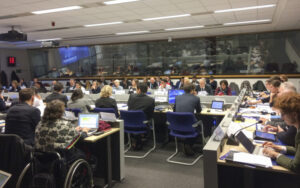
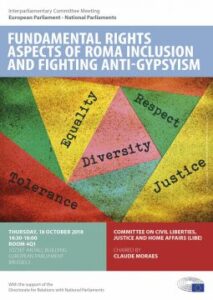
For the first time, Members of National Parliaments were invited by the European Parliament to discuss the fundamental rights of Roma and fighting antigypsyism.

The Alliance against Antigypsyism urged Members of National Parliaments from across the European Union and the Western Balkans to work on increasing political will in their countries to combat antigypsyism and contribute to building a racism-free society.

Soraya Post, Member of the European Parliament who initiated this meeting, expressed a strong appeal to participants: “One year ago the European Parliament adopted my report on the Fundamental rights aspects in Roma integration in the EU: fighting antigypsyism that gives concrete recommendations and legislative demands for how we can fight antigypsyism. I hope that today’s inter-parliamentary committee meeting will support Member States to start taking their responsibilities seriously.”

Jelena Jovanovic, Policy and Research Coordinator of the ERGO Network, said: “The lack of explicit recognition of antigypsyism makes it impossible to develop specific indicators and to commit resources to fight the phenomenon. It also results in institutions’ inability to properly monitor acts of antigypsyism and evaluate the impact of relevant policies. The EU must put the fight against antigypsyism at the core of future Roma inclusion policies and include a meaningful gender perspective in policy-making and implementation.”

Romani Rose, chair of the Central Council of German Sinti and Roma, said: “Antigypsyism, like antisemitism, is aimed primarily at the Sinti and Roma or at the Jews, but in fact, they are an attack on democracy, on the rule of law and our common European values. Above all, therefore, antigypsyism in Europe must finally be banned, sanctioned and consistently fought. An important contribution will be the establishment of an ‘Independent Expert Commission on Antigypsyism’ in Germany following a resolution of the German Bundestag, which shall be established by the federal government in 2019.”

Establishing truth and reconciliation commissions at national and EU levels is indeed key to analyse the causes and manifestations of antigypsyism, as well as to develop appropriate strategies to combat it.

Michaël Privot, Director of the European Network Against Racism, said: “Members of national parliaments are key actors in making the fight against antigypsyism a reality for Roma and improving their lives. They can play a role in reinforcing social cohesion in the face of a worrying increase of xenophobic voices in Europe. We need to build unity across groups affected by racism and implement efficient national and local policies. National plans against racism can complement and reinforce strategies for Roma inclusion, ensuring that all forms of racism are recognised and given equal attention.”

Notes to the editor:

  1. The ‘Alliance against Antigypsyism’ is a coalition of organizations that promote equality of rights for Roma and combat antigypsyism on institutional and societal level. The aim of the Alliance is to advance understanding of antigypsyism as a specific form of racism, and to strengthen the political will and institutional mechanisms in order to tackle antigypsyism in Europe. The Alliance is coordinated by the European Roma Grassroots Organisations (ERGO) Network, the European Network against Racism (ENAR) and the Central Council of German Sinti and Roma
  2. The report of the LIBE Committee “Fundamental rights aspects in Roma integration in the EU: fighting anti-Gypsyism” of 25 October 2017 is available here
  3. The announcement and background documents of the Interparliamentary Committee meeting of the European Parliament LIBE Committee are available online.
  4.  

Related Articles

Fundamental Rights Agency launches first report on Antigypsyism

Fundamental Rights Agency launches first report on Antigypsyism

Press Release of the Alliance against Antigypsyism
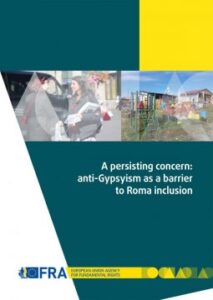
Last week during the 3rd Roma Week in Brussels the EU Fundamental Rights Agency (FRA) released their first report on antigypsyism.

The Alliance against Antigypsyism urged Members of National Parliaments from across the European Union and the Western Balkans to work on increasing political will in their countries to combat antigypsyism and contribute to building a racism-free society.

Soraya Post, Member of the European Parliament who initiated this meeting, expressed a strong appeal to participants: “One year ago the European Parliament adopted my report on the Fundamental rights aspects in Roma integration in the EU: fighting antigypsyism that gives concrete recommendations and legislative demands for how we can fight antigypsyism. I hope that today’s inter-parliamentary committee meeting will support Member States to start taking their responsibilities seriously.”

Jelena Jovanovic, Policy and Research Coordinator of the ERGO Network, said: “The lack of explicit recognition of antigypsyism makes it impossible to develop specific indicators and to commit resources to fight the phenomenon. It also results in institutions’ inability to properly monitor acts of antigypsyism and evaluate the impact of relevant policies. The EU must put the fight against antigypsyism at the core of future Roma inclusion policies and include a meaningful gender perspective in policy-making and implementation.”

Romani Rose, chair of the Central Council of German Sinti and Roma, said: “Antigypsyism, like antisemitism, is aimed primarily at the Sinti and Roma or at the Jews, but in fact, they are an attack on democracy, on the rule of law and our common European values. Above all, therefore, antigypsyism in Europe must finally be banned, sanctioned and consistently fought. An important contribution will be the establishment of an ‘Independent Expert Commission on Antigypsyism’ in Germany following a resolution of the German Bundestag, which shall be established by the federal government in 2019.”

Establishing truth and reconciliation commissions at national and EU levels is indeed key to analyse the causes and manifestations of antigypsyism, as well as to develop appropriate strategies to combat it.

Michaël Privot, Director of the European Network Against Racism, said: “Members of national parliaments are key actors in making the fight against antigypsyism a reality for Roma and improving their lives. They can play a role in reinforcing social cohesion in the face of a worrying increase of xenophobic voices in Europe. We need to build unity across groups affected by racism and implement efficient national and local policies. National plans against racism can complement and reinforce strategies for Roma inclusion, ensuring that all forms of racism are recognised and given equal attention.”

Notes to the editor:

  1. The ‘Alliance against Antigypsyism’ is a coalition of organizations that promote equality of rights for Roma and combat antigypsyism on institutional and societal level. The aim of the Alliance is to advance understanding of antigypsyism as a specific form of racism, and to strengthen the political will and institutional mechanisms in order to tackle antigypsyism in Europe. The Alliance is coordinated by the European Roma Grassroots Organisations (ERGO) Network, the European Network against Racism (ENAR) and the Central Council of German Sinti and Roma
  2. The report of the LIBE Committee “Fundamental rights aspects in Roma integration in the EU: fighting anti-Gypsyism” of 25 October 2017 is available here
  3. The announcement and background documents of the Interparliamentary Committee meeting of the European Parliament LIBE Committee are available online.
  4.  

Related Articles